
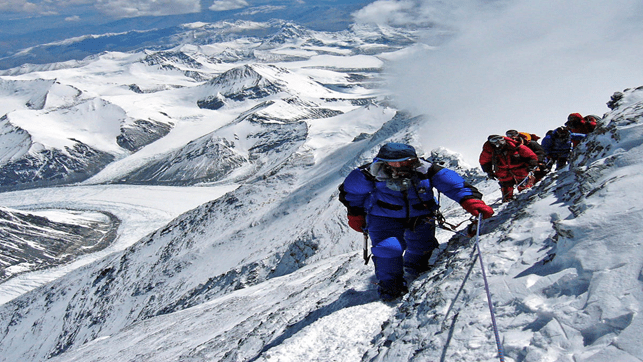
Over the last few decades, tourism and climate change in the Everest region have created challenges. As Douglas (2013) and Sherma (2014) agree that Himalayan glaciers may be disappear due to these factors such as global warning and Natural disasters. In addition, Douglas (2013) highlights that there is not enough water in the Everest region for agriculture and for all new lodges due to disappearance of glaciers. However, according to Sherma (2014), it has become the cause of deadly disasters when glaciers melt and over 16 people died recently due to an avalanche. The researcher concurs that sometimes harsher and regular floods play a significant role to create toxic challenges. Also, it leaves a huge impact on irrigation systems when ice melts (Sherma, 2014). Furthermore, it has been predicted by Sherma (2014) that the Himalayan region glaciers might disappear by the end of 2035 owing to 2% of ice raise and 29% of its loss. Moreover, this study found that storms, landslides, power generation, drinking water and temperature are other main factors in the Everest region. Climate change is also the main cause which creates challenges in the region (Douglas, 2013; Sherma, 2014). As Douglas (2013) observed that weather has changed because of increasing cloud cover. According to Sherma (2014), the temperature has increased 0.74 degree Celsius over the last century. It has been estimated in the report of International Centre for Integrated Mountain Development (ICIMD) that rising global temperature may shrink glaciers by 38 sq.km each year. Therefore, global warming, tourism and other natural disasters creates multiple challenges in the Everest region.
Discover more from Research Initiatives
Subscribe to get the latest posts sent to your email.
