
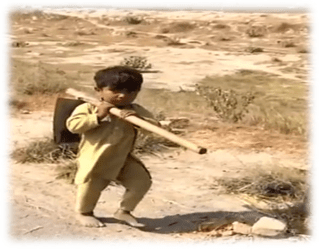
Child labour has become a serious and complicated issue across the rural communities of Pakistan. It has been observed that child labour began in the mid-eighteenth century when the poor children were compelled to dangerous work in the various industries and cheap labour had provided them by these companies (Basu et al, 1999). Throughout this paper the term child labour will be “defined as work that deprives children of their childhood, their potential and their dignity, and that is harmful to physical and mental development” (ILO, n.d). UNICEF (2020) highlights that 1 in 10 children are subjected to child labour across the globe. The aim of this essay is to explore the main determinant of child labour in the rural communities of Pakistan. This essay has been divided into three parts. The first part deals with the traditional beliefs, second part explores the role of the lack of education and finally the links with poverty will be discussed.
It can be argued that the traditional belief is a significant contributory factor of child labour in the rural communities of Pakistan. According to ILO (n.d), It has been reported that customs become a major cause of child isolation; nevertheless, these norms push the children from an early age to pay off the debt of their parents. It is, therefore, clear that they may not experience the normal simplicity of their childhood as others at an early age in their society. Additionally, it has been stated by Akarro & Mtweve (2011) that traditions create a variety of challenges among the poor families, particularly in the women, who may not usually make decisions about their children. They usually prefer to send their children to work in agriculture rather than in schools due to their poor economic circumstances. However, it depends on the worst economic conditions of these poor families as many parents teach their children the specific skills such as cutting crops and sewing clothes in their initial age. ILO (n.d) has claimed that many children enter in unskilled labour market due to the lack of skills. This idea highlights the significance of the lack of options for their children who are under the age of fifteen in the rural areas due to their deprived economic status. On the other hand, many parents have a strong belief that our children will do work as our forefathers did work over the last few centuries. Therefore, children reduce the chance of their healthy growth due to the multiple customs in the rural areas and it is necessary for society to take serious risks for the eradication of these terrible social customs.
Lack of education is also a leading cause of child labour in the rural communities of Pakistan. According to Awan et all (2011), the poor families have a low level of monthly income; moreover, Humanium (2019) observes that almost 23 million children are illiterate across Pakistan. It seems that poor parents do not understand the importance of study and they prefer an alternative work for their children. Cigno et al, (2002) argued that child work increases due to the decision of the parents; nonetheless, it has been pointed out that there are few schools in the villages and the quality of education is unaffordable near to their residence. Therefore, it is unsurprising that many poor families have the lowest options in sending the children to earn money, the most common area of employment is agriculture (Cingo et al, 2002). Basu & Van (1998); Maitra & Ray (2002); Pakistan, Ministry of Labour, Manpower & Overseas Pakistanis, ILO & IPEC (1996) and Ersado (2005) highlights that many children are forced to work in agriculture; however, it has been indicated that poor parents may not provide them the necessities of their life, especially education, parents have a strong belief that education does not give money and work in the agriculture field gives the chance to earn money. Thus, parents may be widely encouraged to pursue the quality of education for their children in the rural communities of Pakistan.
Poverty is the main considerable factor of child labour (Fors, 2012). Chen (2020) indicates that poverty implies the shortage of necessities to live life. It has been estimated that 75% poor earn less than $1 per day in the rural places of Pakistan ( Pinstrup-Andersen & Pandya-lorch,2001; Okunmadewa, 2001; ILO, 2006A; Etim et al. 2009; Etim & Udofia, 2013). It seems that poor families may not fulfil the basic needs of their children such as education, food, and shelter so parents are compelled to send their children for work in their premature age. In addition, it has been argued that poverty is increased due to the large family size (Jayaraman and Findeis (2005); Arif and Farooq (2014). Additionally, over-population play a significant role to increase the child labour in the small villages. So, it is significant to change this perception of the parents because they, consequently, may not provide the basic facilities to their children. Moreover, children are forced to leave their school to support their families (ILO,2006A). For example, agriculture and domestic household work. In addition, it may be considered that child labour in Pakistan comes under pressure due to the low level of monthly income and this income effects on the international trade of country (Dagdemir & Acaroglu, 2010; Reeve, 1987; Castillo & Salem, 2016). Therefore, it is critical to take difficult steps to change the mindset for developing countries in child labour.
This essay has discussed the main threatening determinants of child labour which are the traditional beliefs, the lack of education and the poverty in the rural areas of Pakistan. There are number of factors which contributed to the child labour and it has been explored that without the elimination of child labour situation will not change in the rural communities of Pakistan. There are multiple studies on this social issue; however, many researchers have observed that poverty is the fundamental root cause of child labour. It is, therefore, would be significant to carefully explore the basic roots of poverty; furthermore, it is essential to examine the major reasons of this social evil; nonetheless, child labour still exists in the country after the implementation of various laws and legislations. Thus, it is the responsibility of Government to take significant steps for the eradication of child labour and the quality of education should be provided in the villages to subsidise the poor families.
References
Akarro, R. R. J. and Mtweve, N. A. (2011) Poverty and its association with child labor in Njombe District in Tanzania: the case of Igima Ward, Current Research Journal of Social Sciences, 3(3), pp:199-206. accessed 10 2 2021].
Arif and Farooq (2014) Rural Poverty Dynamics in Pakistan: Evidence from Three Waves of the Panel Survey the Pakistan Development Review pp. 71-98
Basu, K. and Van, P. (1998) The economics of child labor, American Economic Review, 88(03), pp: 412-427.
Basu, K. (1999) Child Labor: Cause, consequence, and cure, with remarks on international labour standards, Journal of Economic Literature, 37(3), pp: 1083-1119. DOI: https://doi.org/10.1257/jel.37.3.1083
Castillo, L. L. & Salem, D. S. (2016) Does globalization contribute to decreasing child labour rates? Revisited economía mundia, 44, 127-152.
CHEN, J. (2020),’What is poverty’? Investopedia. [Online] Available at: https://www.investopedia.com/terms/p/poverty.asp [Accessed 11 02 2021].
Cigno, A., Rosati, F. & Guarcello, L. (2002). Does Globalization Increase Child Labour? World Development, 30(9), 1579–1589 Convention on the Rights of Child. United Nations human rights. http://www.ohchr.org/en/professionalinterest/pages/crc.aspx.
Dagdemir, O. and Acaroglu, H. (2010) The effects of globalization on child labor in developing countries, Business & Economic Horizons (BEH), 2(2), pp: 37-47. DOI: https://doi.org/10.15208/beh.2010.15
Etim, N. A. and Udofia, U. S. (2013) Analysis of poverty among subsistence waterleaf producers in the tropic: implications for household food and nutrition security, American Journal of Advanced Agricultural Research, 1(2), pp: 62-68.
Etim, N. A., Edet, G. E. and Esu, B. B. (2009) Determinants of poverty among peri urban Telferia occidentalis farmers in Uyo, Nigeria, Journal of Agriculture and Social Sciences, 5(1/2), pp: 49-51.
Humanium, 2019. Children of Pakistan. [Online] Available at: https://www.humanium.org/en/pakistan/ [Accessed 10 02 2021]
ILO, n.d. International Labour Organization. [Online] Available at: https://www.ilo.org/ipec/facts/lang–en/index.htm
International Labour Organization (2006a) The end of child labor: within reach. Global Report under follow-up to the ILO Declaration on Fundamental Principles and Rights at Work, Geneva: International Labour Office.DOI: https://doi.org/10.7202/000146ar
Jayaraman, Anuja and Jill L. Findeis (2005) Disaster, Population and Poverty Among Bangladesh Household. Annual Meeting of the Population Association America.
Maitra, P. & Ray, R. (2002) The joint estimation of child participation in schooling and employment: comparative evidence from three continents, Oxford Development Studies, 30(1), pp: 41-62. DOI: https://doi.org/10.1080/136008101200114895
Okunmadewa, F. (2001) Poverty reduction in Nigeria: a four-point demand, An Annual Guest Lecture, Ibadan, Nigeria: ‘The House’, University of Ibadan.
Pakistan, Ministry of Labour, Manpower and Overseas Pakistanis, ILO & IPEC (1996) Summary Results of Child
Labour Survey in Pakistan.
Pinstrup-Andersen, P. and Pandya-Lorch, R. (2001) Agricultural growth is the key to poverty alleviation in low-income developing countries, The Unfinished Agenda.
Reeve, A. (ed.) (1987) Modern Theories of Exploitation, SAGE Modern Politics series (Book 14) 1st Edition, California, USA: SAGE Publications.
UNICEF, 2020. UNICEF for early child. [Online] Available at: https://www.unicef.org/protection/child-labour[Accessed 10 02 2021].
Discover more from Research Initiatives
Subscribe to get the latest posts sent to your email.
