
In the bustling city of Datalis, a curious mystery consumed the minds of the research community. A new policy had transformed how citizens used public parks, but reports were wildly conflicting. Some said it improved community life. Others claimed it worsened inequality. The government, baffled, needed answers—and fast. Enter Dr. Sera Lin, a sharp-minded sociologist known for solving social riddles. She wasn’t interested in big, messy numbers. Her specialty? Finding the right people to talk to.
Instead of sending out random surveys to thousands, Sera used a method few understood but all respected: purposive sampling. Her logic was simple: not everyone held the keys to this mystery. To uncover the truth, she needed the puzzle solvers—urban planners who designed the policy, community organizers who protested it, long-time residents who saw the neighborhood change, and new park users whose voices were often left unheard.
With her notebook in hand, Sera visited the city’s corners, alleyways, and coffee shops. She handpicked her participants not by chance, but by purpose—each one chosen for their unique insight. She didn’t want “average” answers. She wanted the deep, the specific, the essential perspectives that could illuminate the issue. Her interviews wove together like threads in a tapestry. From these carefully selected voices emerged a clear pattern: while the policy increased green space access for some, it unintentionally displaced others. The truth was nuanced, complex—and it wouldn’t have been found through random sampling.
When Sera presented her findings to the city council, even the skeptics leaned in. Her purposive sampling had turned chaos into clarity.
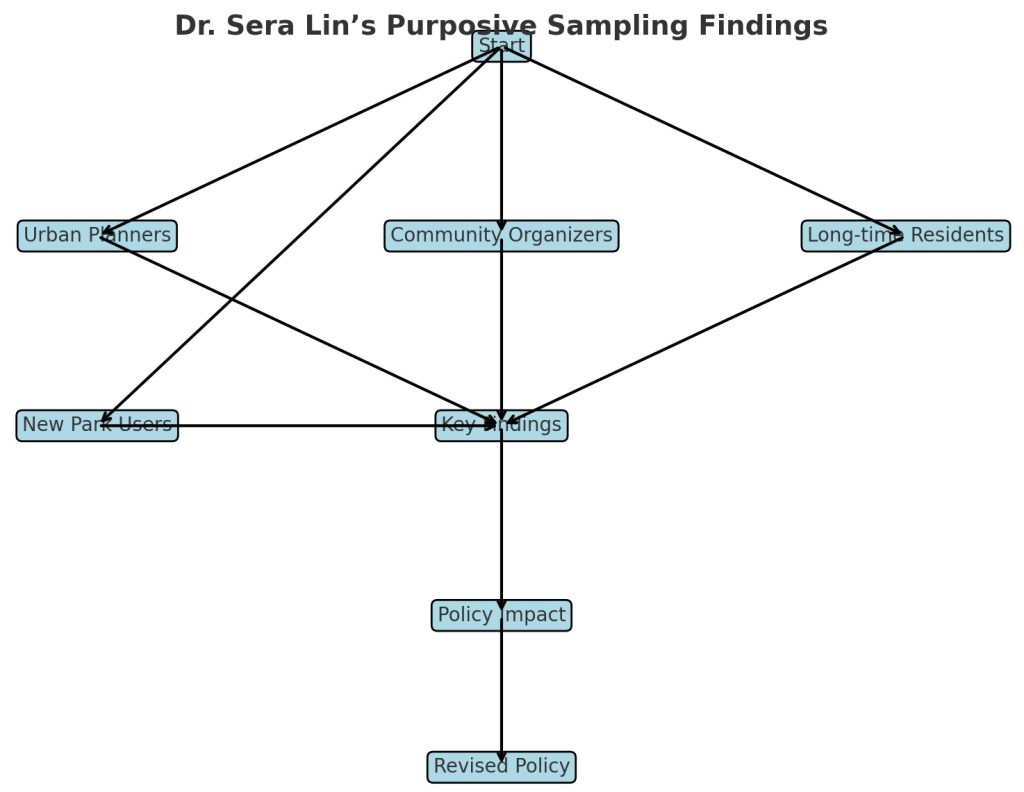
In the end, the policy was revised. The parks became more inclusive. And Sera, once again, reminded the world that sometimes, to understand the whole, you must intentionally seek the parts that matter most.
Discover more from Research Initiatives
Subscribe to get the latest posts sent to your email.
